Extending The Life Of A 40-Year-Old Steel Structure
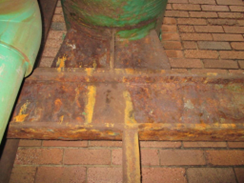
Typical extent of corrosion found
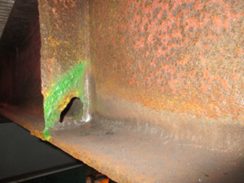
Illustrating general corrosion pitting and holes
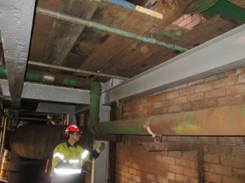
Progress of treatment
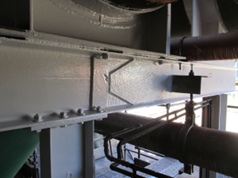
Critical support structure now protected
OVERVIEW: There’s no doubting the power of mother nature. Seawater is a naturally corrosive substance that is problematic when you want to protect your valuable plant assets. When you’re operating in an immersed environment, the right choice of protective coating will help maximise the life of your equipment and protect it from corrosion for longer.
Critical support structure for 40 year old overhead pipe services into turbine hall
CHALLENGE
The original environment was considered atmospheric. However, due to regular leaking valves and flanges, the protective coating specification required reclassification to immersed after the original paint system failed.
Difficult access and an ageing asset were key factors in the assessment process. Additionally, abrasive blasting was not possible as the containment and clean-up costs were prohibitive.
SOLUTION
Following site mobilisation, and mechanical cleaning of difficult to reach areas, the substrate was given an ultra-high-pressure water blasting of up to 20,000 psi using a small footprint machine.
The team carried out soluble salt tests to ensure the levels were within coating parameters. Next steps involved applying Epo-chem™ RL 500P to a nominal thickness of 100µm, and then a top coat using Epo-chem™ RA 500 with a nominal DFT of 350µm.
Gaps between the pipe saddles and pipe itself were sealed to give the structure extra protection against moisture and air.
SCOPE
Mobilise to site
Mechanically clean hard to reach spaces
Ultra-high-pressure water blast up to 20,000 psi using small footprint machine
Soluble salt tests conducted to ensure levels are within coating parameters
Apply Epo-chem™ RS 500P to a nominal thickness of 100µm
Apply Epo-chem™ RA 500M top coat with a nominal DFT of 350µm
PRODUCTS
Epo-chem™ RS 500P primer – a wet and surface tolerant mio epoxy primer
Epo-chem™ RA 500M series, a moisture tolerant glass flake filled epoxy top coat, providing excellent long term corrosion resistance
OUTCOME
Water blasting combined with the mix of a moisture tolerant epoxy primer and a glassflake filled epoxy top coat proved the perfect formula for long-term corrosion resistance. The customer also saved thousands in replacement costs, enabling the power station to continue operating at peak productivity without concerns of future corrosion.
Condition of surface before mechanical preparation RB 364 applied to spot abrasive blasted surfaces Pugmill externals Coating with InD Cote Previous Next OVERVIEW: A
Repairs required Application of Primer Coating applied to affected areas After application of Topcoat Previous Next OVERVIEW: A 40 year old excess gas bleeder structure
After whip abrasive blasting Application of Epo-chem system to internals Basalt Fibre application on internals OVERVIEW: A steel production plant contracted Chemcote to reinforce